





Key takeaways:
- Unique rock layers reveal Earth’s history through their intricate patterns, colors, and embedded fossils, prompting curiosity about ancient environments.
- Understanding geological features involves analyzing fossil presence, layer thickness, mineral composition, and color variations which indicate past environmental conditions.
- Effective exploration combines field observations, sampling techniques, and digital modeling, alongside proper preparation and collaboration to enhance knowledge-sharing and safety.
Understanding Unique Rock Layers
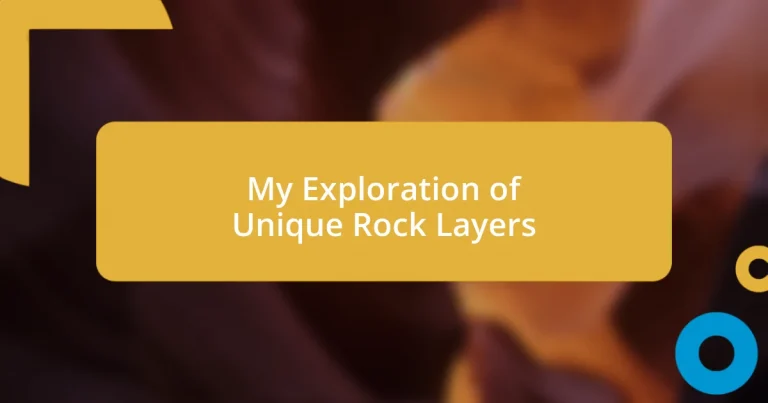
When I first encountered unique rock layers, I was struck by their intricate patterns and vivid colors, which seemed to tell a story of the Earth’s history. Each layer, formed over thousands to millions of years, reveals crucial clues about past environments and geological events. Have you ever stopped to wonder how a single rock formation could encapsulate the secrets of ancient oceans or volcanic eruptions?
As I explored various locations, I learned that these rock layers are often visually stunning, with some revealing complex fossils embedded within them. It’s like nature’s own museum; each fossilized shell or plant etched into the stone sparked a childlike curiosity in me. Doesn’t it make you think about the vast periods of time and conditions that led to such formations?
Delving deeper, I realized that understanding unique rock layers also involves recognizing the forces at play, including erosion, sedimentation, and tectonic shifts. This dynamic relationship highlights the Earth’s ever-changing nature, where moments in time are captured in a single stratum. It’s fascinating to ponder: what stories do the layers beneath your feet hold?
Identifying Geological Features
As I ventured into various geological formations, I became more attuned to the distinct features that characterize each layer. It’s intriguing to me how different colors and textures can hint at the environment in which they formed. Observing variations, I often found myself imagining the landscapes of the distant past.
- Fossil Presence: Sometimes, I would stumble upon a fossilized imprint and feel a rush of excitement, as if I had made a personal connection with ancient life.
- Layer Thickness: The differences in thickness not only add aesthetic value but also indicate the speed of deposition; thinner layers suggest slower accumulation periods.
- Mineral Composition: I noticed that certain layers are rich in specific minerals, which can tell you whether the environment was arid, aquatic, or volcanic.
- Color Variation: Shifts in color can signal changes in chemical composition or environmental conditions, sparking a sense of wonder each time I spied a vibrant red layer amidst muted tones.
Navigating these features has given me a deeper appreciation for the Earth’s myriad stories. Each exploration not only enriches my understanding but also evokes feelings of awe—a reminder that our planet holds history waiting to be uncovered.
Exploring Rock Layer Formation
Recognizing rock layer formation has always intrigued me. It’s remarkable how sedimentary rock layers develop through gradual processes like erosion and weathering. I vividly recall standing at a canyon and watching layers form right before my eyes, as the river carved its path. The idea that these formations are time capsules—each one telling the story of Earth’s changing environments—fills me with wonder. Isn’t it mind-blowing to think that every layer could have taken years, or even centuries, to deposit?
One particularly memorable moment was while hiking near a distinctive outcrop. I noticed a striking horizontal layer, and I immediately wondered about the ancient river that once flowed there, gently depositing sediments. I could almost envision the small creatures and plant life that dwelled in that environment long ago. This connection created a profound sense of appreciation for how interconnected our planet’s history and geology really are.
In exploring different locations, I found such diversity in rock layer formation. These layers can range from volcanic ash beds to limestone imbued with marine fossils. Each type reflects unique environmental conditions. For instance, I remember gazing at a weathered cliff face; the layers there revealed clear evidence of varying climates over time, making me reflect on how adaptable life must be. Hasn’t nature always found a way to thrive, regardless of the challenges presented?
| Layer Type | Formation Process |
|---|---|
| Sedimentary | Deposited by water or wind over time |
| Igneous | Formed from cooled magma or lava |
| Metamorphic | Altered by heat and pressure from existing rocks |
Analyzing Layer Composition
Analyzing the composition of each layer has become one of my favorite aspects of exploring geological formations. For instance, during one excursion, I found myself captivated by a layer that displayed a dazzling array of minerals. I remember bending down, running my fingers across the rough texture, and marveling at how such beauty formed over millennia—can you imagine the forces of nature at play during that time?
One time, while studying a colorful rock face, I recognized that the variations in mineral content revealed distinct periods of environmental change. There were streaks of rich gold and vibrant greens that hinted at ancient volcanic activity. I couldn’t help but wonder what the landscape looked like when those minerals were formed—was it filled with towering mountains, or did gentle waves lap against the shores? The answers felt just out of reach, yet tantalizingly close.
In another moment of exploration, I stumbled upon a layer rich in clay. The soft, malleable substance told me a story of a wetland environment that had once thrived here. As I shaped a small piece between my fingers, I thought about how people might have lived beside this ancient marsh, nurturing a deep connection with the water. It’s these realizations that transport me to another time, deepening my appreciation for the complexity of the Earth’s history. Isn’t it fascinating how each layer doesn’t just tell a tale of geology, but also of life itself?
Techniques for Rock Layer Study
Studying rock layers involves a combination of visual observation, field sampling, and advanced techniques. I’ve often found that simply examining the physical characteristics of a formation can reveal a wealth of information. Once, while hiking along a rugged trail, I noticed how the color gradients in the stratification hinted at different periods of sediment deposition. Isn’t it incredible how a simple glance can unravel geological secrets hidden for millions of years?
Field sampling is another crucial approach. I remember collecting small rock samples from various layers, each time imagining the natural forces that shaped them. In my experience, analyzing these samples with tools like a hand lens or a portable microscope unveils fascinating details, such as tiny fossilized remains that tell stories of past life. Have you ever thought about the life that was once part of those rocks? It always amazes me to think that these small details can offer such insight into the planet’s history.
Another technique I’ve come to love is 3D modeling, which allows for a digital reconstruction of rock formations. On my last trip, I used a smartphone app to create a 3D map of an exposed cliff face. Watching the layers come to life on my screen was exhilarating, as I could rotate and explore each stratum in detail. Isn’t that a fantastic way to connect with geology? The technology opens up a new world, blending science and exploration in an engaging way. Each technique I apply adds a layer of depth to my understanding and appreciation of these awe-inspiring formations.
Field Trip Guidelines for Exploration
Field trips can be incredibly enriching, but preparation is key. I always make a checklist before heading out, ensuring I have essentials like sturdy footwear, a field notebook, and a trusty camera. The first time I forgot my camera was such a disappointment! I learned quickly that capturing those breathtaking views or unique rock formations is just as important as studying them. Have you ever missed an opportunity to document a moment just because you were unprepared?
Safety is another crucial aspect to consider. For instance, on one exploration, we encountered a steep cliff with loose rocks that made it tricky to navigate. I felt that rush of excitement mixed with anxiety, reminding me of how quickly situations could change in the field. I firmly believe that assessing the terrain and keeping aware of weather conditions can make a significant difference in enjoying a safe adventure. After all, isn’t it better to be cautious and thoroughly enjoy the exploration rather than rush into a risky situation?
Finally, collaboration often enriches the experience. I remember my last trip where I teamed up with a group of fellow enthusiasts. We engaged in lively discussions, sharing our insights about geological formations and discoveries. It made the experience not just about observing but also about connecting and learning together. Have you ever shared your passion with others who inspire you? That camaraderie transforms exploration into an unforgettable journey.

Documenting Your Findings
When documenting your findings, clarity is essential. I always ensure my field notes are detailed, capturing not just measurements but also my thoughts and feelings about the site. For example, during one expedition, I came across a breathtaking geological feature that left me speechless; I wanted to convey that sense of awe in my notes. How do you describe moments that move you? For me, it’s about painting a mental picture that I can reflect on later.
Photography plays a pivotal role in documenting findings, too. I recall a time when I took a series of photos to illustrate the layers I was studying. Each picture wasn’t just a snapshot; it was a story waiting to be told! The emotion in the light shimmering on the rock faces made me realize how a well-captured image could evoke feeling and context for future reference. Have you ever looked back at a photo and felt transported back to that moment?
Lastly, sharing your insights and findings can enhance both your understanding and that of others. After a particularly fruitful exploration, I presented my discoveries to my local geology group. Not only did discussing my findings deepen my comprehension, but seeing the excitement on others’ faces was incredibly rewarding. It made me think: how often do we miss opportunities to learn from each other? Collaborative discussions breathe new life into exploration, turning individual experiences into a collective adventure.